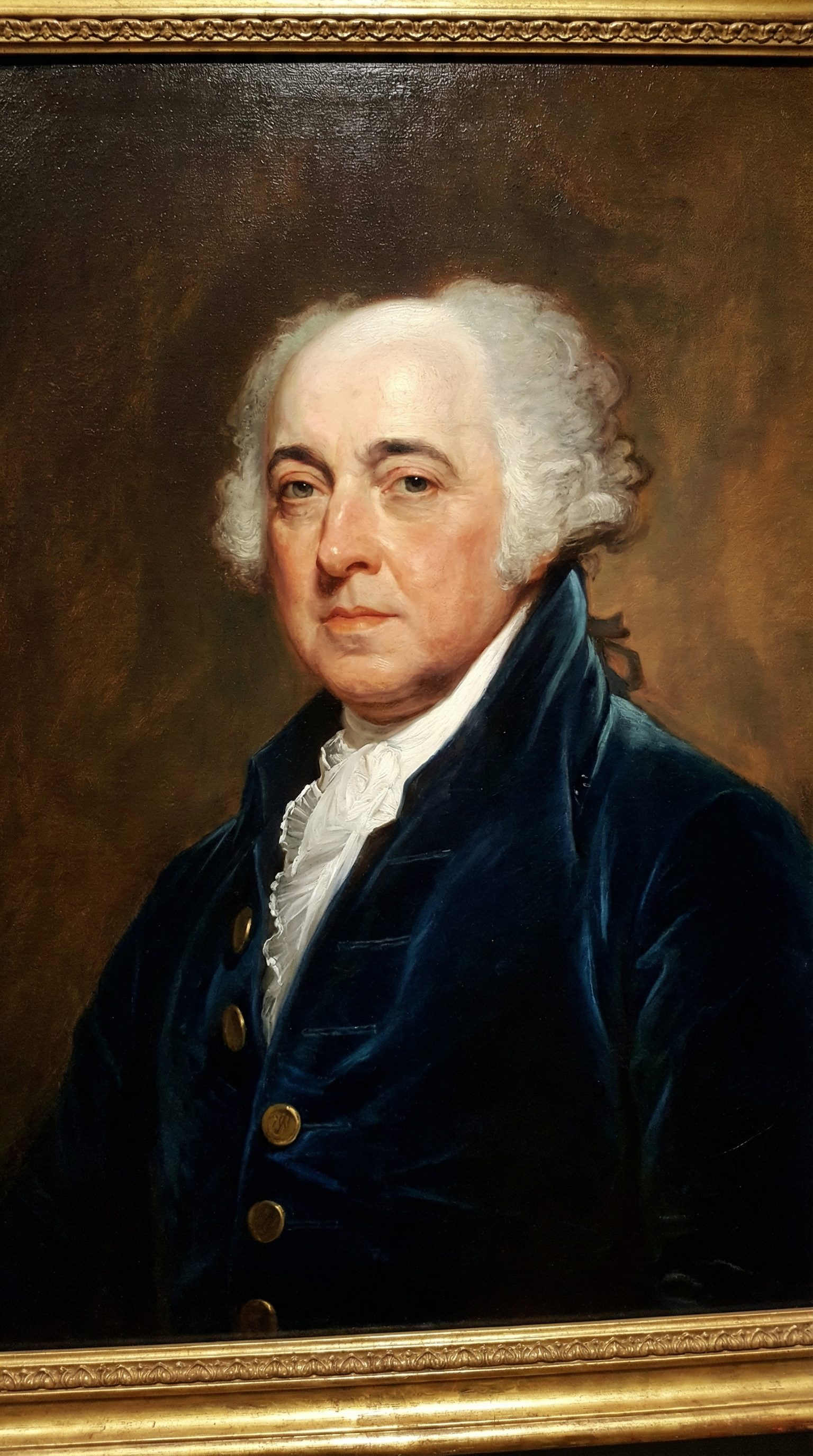
"Facts are stubborn things; and whatever may be our wishes, our inclinations, or the dictates of our passion, they cannot alter the state of facts and evidence."
— John Adams, Boston Massacre Trial, 1770
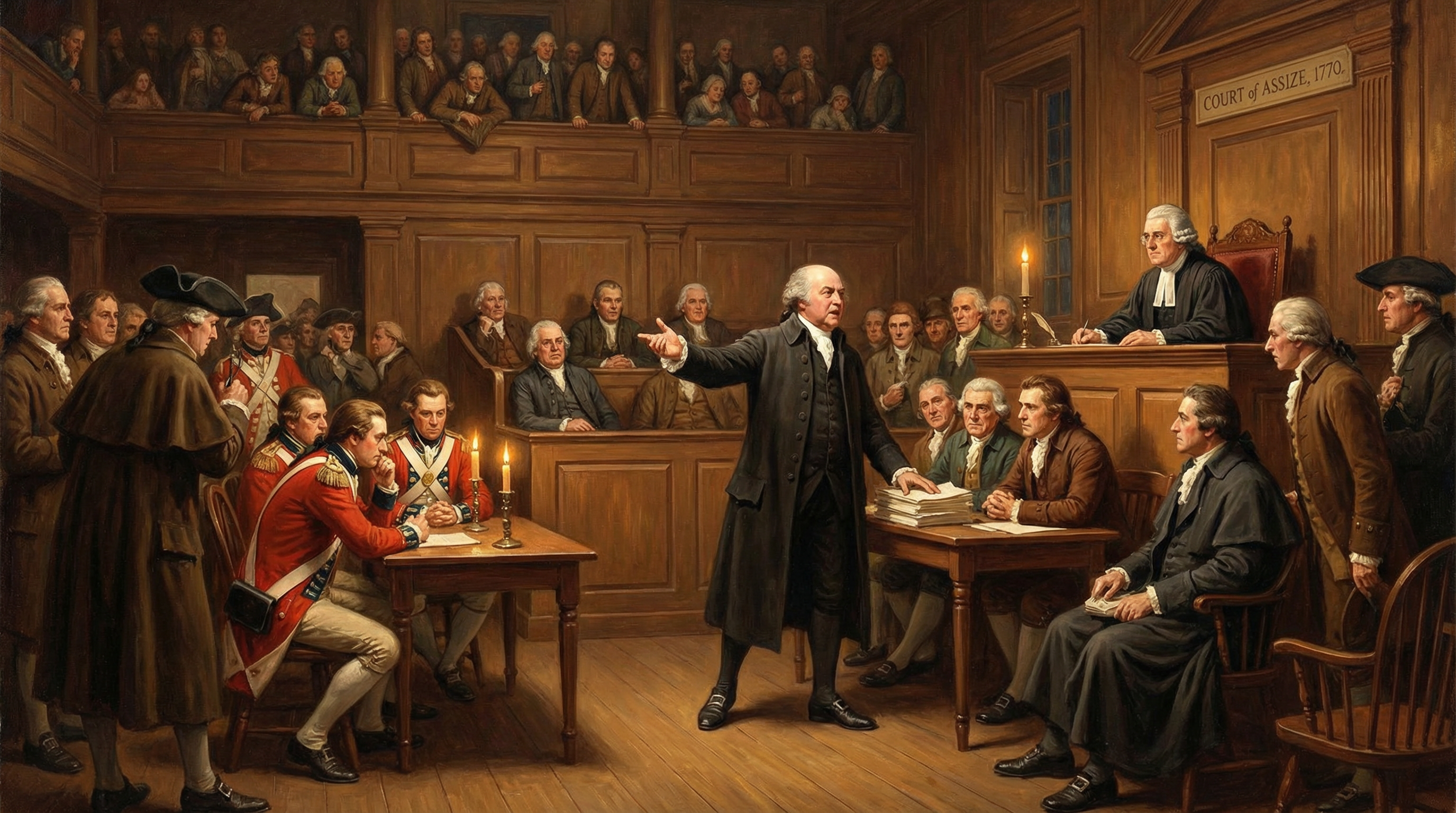
John Adams defending the British soldiers at the Boston Massacre Trial, 1770
The Boston Massacre Defense
In 1770, John Adams made one of the most courageous decisions in American legal history. When British soldiers were accused of murder after the Boston Massacre, no lawyer in Boston would defend them—except John Adams.
Despite intense public pressure and threats to his career, Adams took the case because he believed that every person—even the most despised—deserves a fair trial and competent legal representation. This wasn't about sympathy for the British; it was about principle.
On March 5, 1770, British soldiers fired into a crowd of colonists, killing five men. The city was outraged, and the soldiers faced almost certain conviction. Yet Adams argued brilliantly that the soldiers had acted in self-defense against a threatening mob.
Adams successfully defended the soldiers, securing acquittals for six of the eight accused and reduced charges for the remaining two. He later called this defense"one of the best pieces of service I ever rendered my country."
"It is more important that innocence be protected than it is that guilt be punished, for guilt and crimes are so frequent in this world that they cannot all be punished. But if innocence itself is brought to the bar and condemned, perhaps to die, then the citizen will say, 'whether I do good or whether I do evil is immaterial, for innocence itself is no protection,' and if such an idea as that were to take hold in the mind of the citizen that would be the end of security whatsoever."
— John Adams, Argument in Defense of the British Soldiers
Harvard & Legal Education
John Adams entered Harvard College in 1751 at the age of fifteen. Though his father hoped he would become a minister, Adams discovered his passion for law and philosophy during his studies.
After graduating in 1755, Adams taught school in Worcester, Massachusetts while studying law under James Putnam. He was admitted to the bar in 1758 and quickly established himself as one of Boston's most capable attorneys.
Adams was known for his meticulous preparation and his belief that lawyers had a sacred duty to uphold justice. He wrote extensively on legal theory, arguing that an independent judiciary was essential to liberty.
His legal writings, including his influential "Dissertation on the Canon and Feudal Law" (1765), established him as a leading intellectual voice against tyranny and for the rule of law.
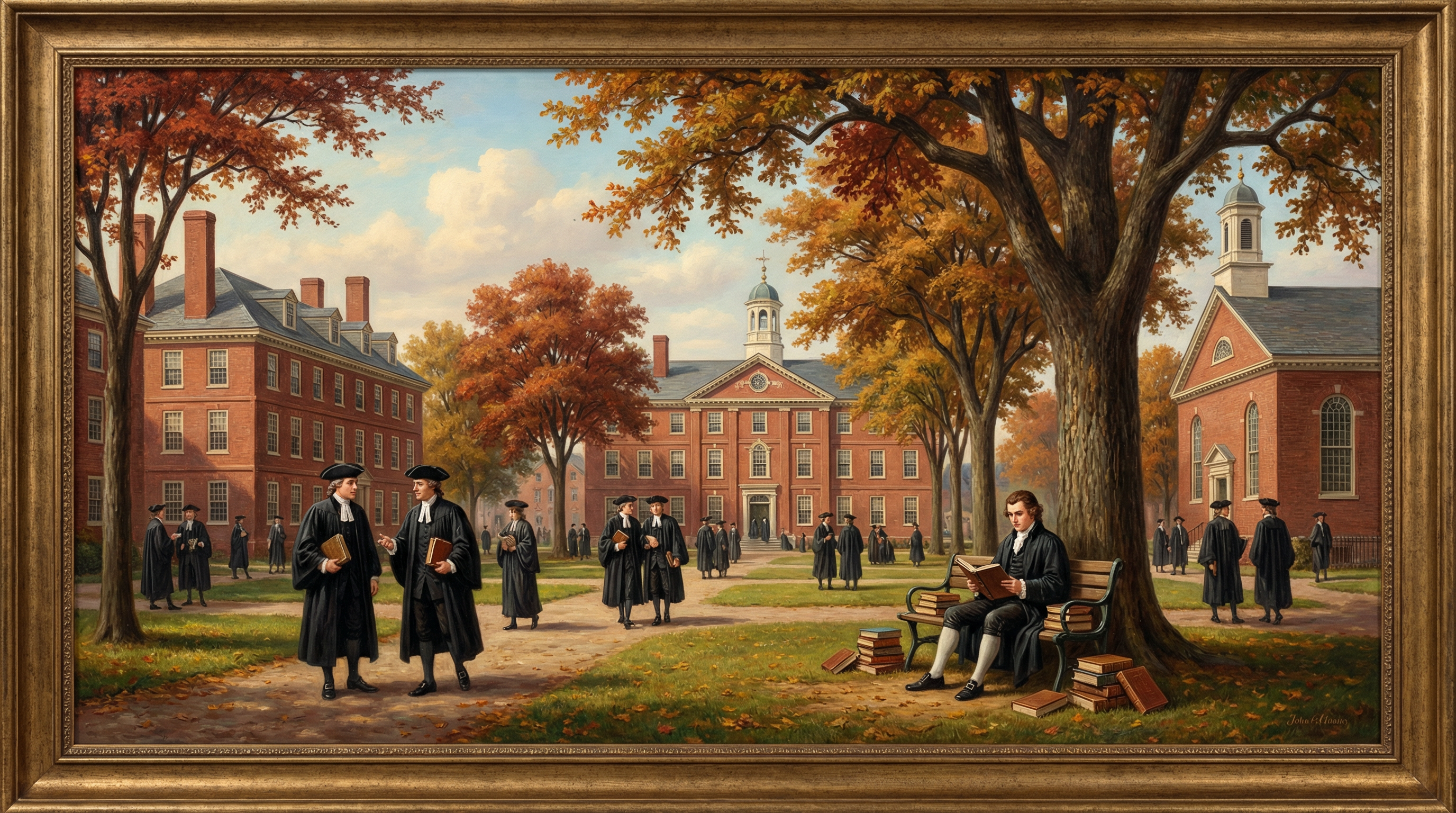
Harvard College in the 1750s, where young John Adams studied law and philosophy
Adams' Principles, Our Mission
The values John Adams championed over 250 years ago remain the foundation of our work today.
Equal Justice Under Law
Adams believed that the law must apply equally to all—rich or poor, powerful or weak, popular or despised. We monitor courts to ensure this principle is upheld.
Courage Over Convenience
Adams risked his reputation to defend unpopular clients. We follow his example by exposing judicial misconduct regardless of political consequences.
Facts Over Passion
Adams famously said that facts are stubborn things. Our investigations are grounded in evidence, data, and rigorous documentation—not emotion or agenda.
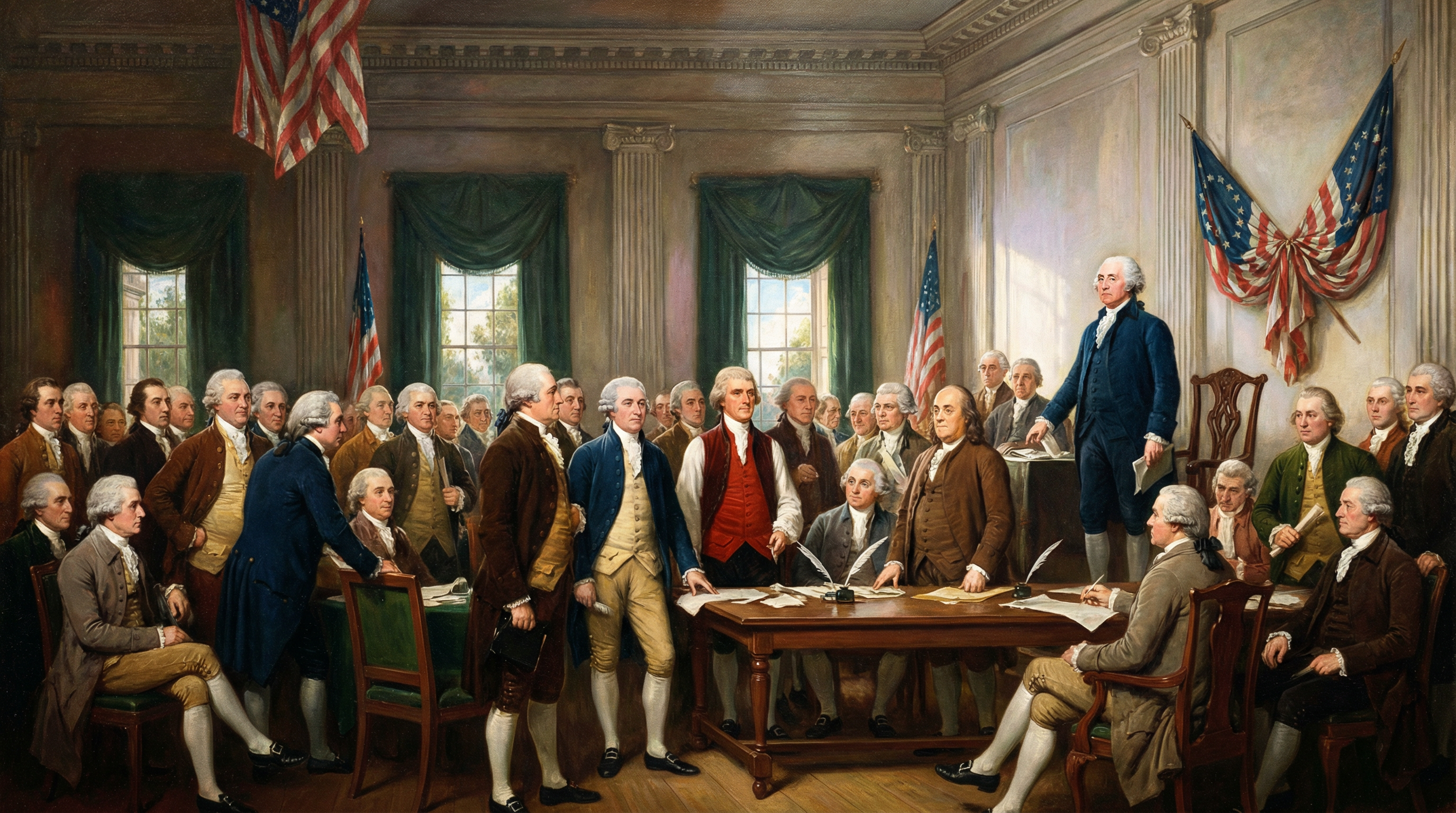
The signing of the Declaration of Independence, July 4, 1776
Architect of Independence
John Adams was one of the most influential advocates for American independence. Thomas Jefferson called him "the pillar of support on the floor of Congress" for the Declaration of Independence.
Adams served on the committee that drafted the Declaration alongside Jefferson, Benjamin Franklin, Roger Sherman, and Robert Livingston. While Jefferson wrote the document, Adams was its most passionate defender in debate.
In 1780, Adams authored the Massachusetts Constitution—the oldest functioning written constitution in the world. It established the principle of separation of powers and an independent judiciary, ideas that would later influence the U.S. Constitution.
John Adams: A Life of Principle
Born in Braintree, Massachusetts
John Adams was born into a modest farming family on October 30, 1735. His father was a farmer, deacon, and town councilman who instilled in him a deep respect for education and civic duty.
Enters Harvard College
At age fifteen, Adams began his studies at Harvard, where he would develop his passion for law, philosophy, and classical literature.
Admitted to the Massachusetts Bar
Adams began his legal career, quickly earning a reputation for integrity, thorough preparation, and unwavering commitment to justice.
Defends British Soldiers
In his most famous case, Adams defended the British soldiers accused in the Boston Massacre, demonstrating that principle must prevail over popularity. He secured acquittals for most defendants.
Declaration of Independence
Adams was instrumental in drafting and advocating for the Declaration, serving on the drafting committee and passionately defending it in Congress.
Massachusetts Constitution
Adams authored the Massachusetts Constitution, the oldest functioning written constitution in the world, establishing separation of powers and an independent judiciary.
First Vice President
Adams served as the nation's first Vice President under George Washington, helping to establish the traditions and protocols of the new government.
Second President of the United States
Adams became the second President, navigating the young nation through the Quasi-War with France while avoiding full-scale conflict—a decision he considered his greatest achievement.
Dies on July 4th
John Adams died on July 4, 1826—the 50th anniversary of the Declaration of Independence—just hours after Thomas Jefferson. His last words were reportedly: "Thomas Jefferson survives."
Fascinating Facts About John Adams
Lesser-known details about one of America's most principled founders.
Prolific Writer
Adams wrote over 1,000 letters to his wife Abigail, providing an intimate window into the founding of America. Their correspondence is considered one of the greatest epistolary collections in American history.
First White House Resident
Adams was the first President to live in the White House, moving in on November 1, 1800. He famously wrote a prayer for the house that is now inscribed in the State Dining Room.
Adams Dynasty
His son, John Quincy Adams, became the sixth President—the only father-son presidential pair until George H.W. Bush and George W. Bush.
Avoided War with France
Despite immense political pressure, Adams negotiated peace with France during the Quasi-War, a decision that cost him re-election but which he considered his greatest achievement.
Never Owned Slaves
Unlike many of his contemporaries, Adams never owned slaves. He and Abigail both opposed slavery, though he did not make it a central political issue during his career.
Longest-Lived President
Adams lived to age 90, making him the longest-lived president until Ronald Reagan surpassed him in 2001. He remained intellectually active until his final days.
Continuing His Legacy
The John Adams Inquirer carries forward the principles that defined Adams' life: that justice must be equal, that facts must prevail over passion, and that the powerful must be held accountable. When we expose judicial bias and corruption, we honor the man who risked everything to defend the rule of law.